
Slopes, swales and burn areas
Hillside Erosion Control in Los Angeles, CA
Soil cover for steep ground, matched to the slope and installed before winter storms arrive.
- No-charge visits to your property, with estimates in writing
- Itemized quotes: prep, seed, mulch and erosion control
- Seed mixes picked for coast, basin, valley or foothill
Holding Slopes Through a Short, Violent Rainy Season
Hillside erosion control in Los Angeles is about one thing: keeping soil where it is when a winter storm hits a bare slope. The city sits between the Santa Monica Mountains and the San Gabriel foothills, with hillside neighborhoods from San Pedro to the Crescenta Valley, and its rain arrives in a few heavy months. A series of rainy days can send mud down hills, especially where wildfire has stripped the vegetation. Our erosion control services put a protective layer on that ground fast and then get roots growing in it.
Picking the right cover for the slope
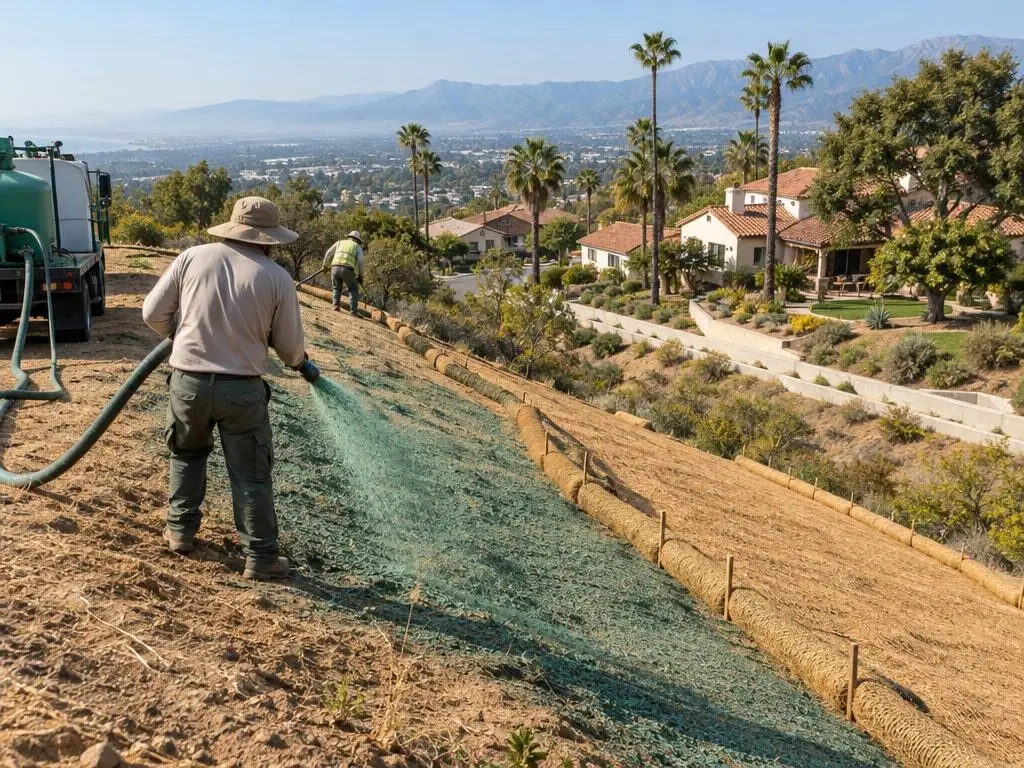
A gentle bank can be held with a heavy rate of hydraulic wood or paper mulch and seed. Steeper ground needs more. Bonded fiber matrix is a hydraulic mulch with a stronger binder that sets into a continuous, porous crust, so it resists raindrop impact and sheet flow better than plain mulch. Erosion control blankets, made of straw, a straw and coconut blend, or pure coir, are rolled down the slope and stapled, and they work where water concentrates, such as swales and the steepest cuts. Straw wattles, also called fiber rolls, go across the slope on the contour to slow runoff and catch sediment. Most hillsides end up with a combination.
What the city's grading code expects
The Los Angeles Building Code requires cut and fill slopes in designated hillside areas to be planted and irrigated to grow ground cover. Slopes under 15 feet in height need grass or ground cover plants and an irrigation system, though hand watering from hose bibs may be allowed when a hose of 50 feet or less can reach. Slopes over 15 feet also need one-gallon shrubs at 10 feet on center or trees at 20 feet on center. Sprinklers on those slopes cannot apply more than 3/10 inch per hour, and they cannot run long enough to saturate the soil. The code also asks for plants that are deep-rooted, need limited water and have fire-retardant characteristics. Seed and mulch are usually the first layer of that planting.
Drainage comes first
No mulch holds a slope that is taking concentrated water from above. The grading code calls for berms at the top of graded slopes, paved diverter terraces where steeper ground drains onto them, and interceptor terraces on the face of slopes at vertical intervals of no more than 25 feet. If your slope has a broken terrace, a clogged down drain or a roof leader dumping onto it, we will point it out. Fixing that water is part of erosion control, and on engineered slopes it is work for your engineer and a concrete contractor before we seed.
Burned hillsides
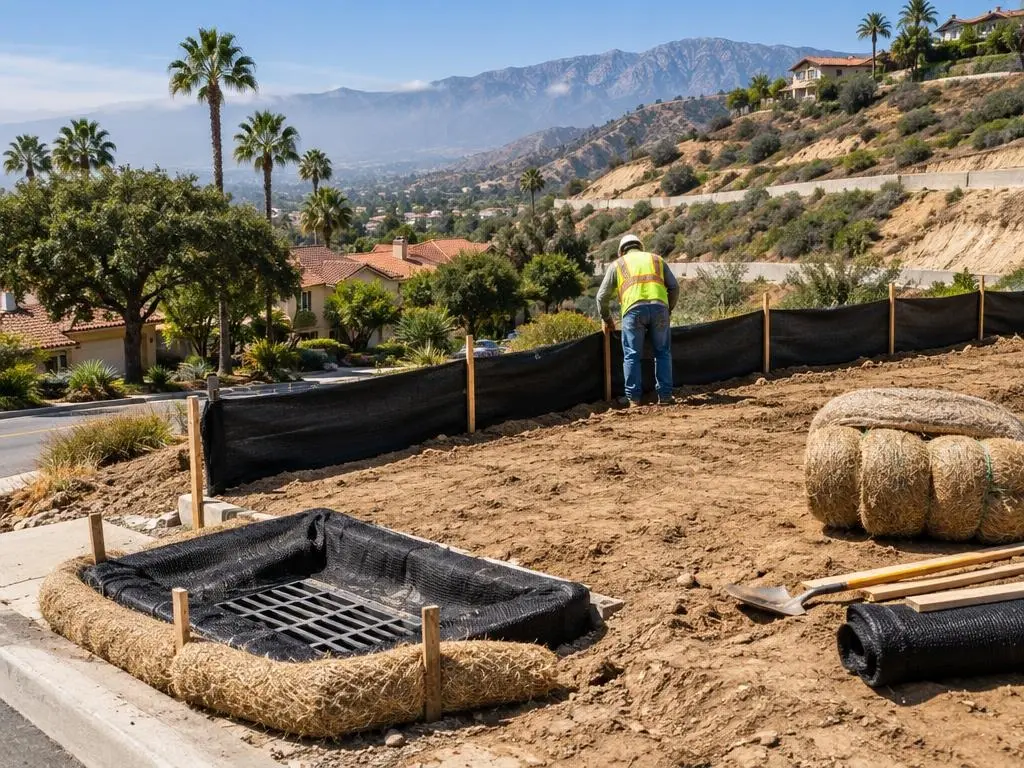
After a fire, the immediate goal is to slow runoff and hold soil, not to grow a lawn. The steepest burned ground gets bonded fiber matrix or a rolled blanket, wattles go across the slope and silt fence goes along the bottom to keep sediment off streets and out of storm drains. For the seed, we usually choose fast cover species and native plants rather than turf. A hillside that is cracking, bulging or slipping is a geotechnical problem; we will tell you to call an engineer before we spray anything.
Timing
The city treats October 1 to April 15 as the rainy season, and hillside owners with unfinished grading over 200 cubic yards must file an erosion control plan with their grading inspector before October 1. The best time to cover a slope is late summer or early fall, so the mulch is in place before the first storm. If you are reading this in December, it is still worth doing: covered ground sheds far less soil than bare ground, even before seed sprouts.
Swales, ditches and channel banks
Water that gathers into a swale or roadside ditch moves faster and cuts deeper than water spread across a slope. Loose hydromulch does not last long in those spots. We line drainage paths with stapled blankets, overlapping them in the direction of flow so water runs over the seams instead of under them, and seed beneath the blanket so roots grow up through it. Where a channel carries a lot of water, the fix may be rock or a paved drain that an engineer designs.
After each storm
Erosion control is not a one-visit job on a big hillside. After significant rain we look for rills forming in the mulch, wattles that have been undercut or shifted, blankets lifted at the edges and sediment piled behind the silt fence. Small repairs made early stop a rill from turning into a gully. Many owners book a check after the first two or three storms of the season.
Seed under the cover
Seed choice on a slope is about roots. Quick annual grasses germinate in the first rains and give cover within weeks, but they die back in summer. Perennial and native species start slower and then hold the soil for years. Most of our hillside mixes combine both, so the slope is protected the first winter and keeps a living root mat after that.
Erosion Control Methods
We match the method to the slope angle, soil and water flow.
Hydromulch and seed
Wood or paper fiber with seed and tackifier for moderate slopes and broad areas.
Bonded fiber matrix
A heavier hydraulic mulch that bonds into a porous crust on steep or highly erodible slopes.
Erosion control blankets
Straw, straw-coir or coir blankets stapled to slopes, swales and channel banks.
Straw wattles
Fiber rolls staked across the slope to break up runoff and catch soil.
Swale and ditch lining
Blankets and seed in drainage paths where water concentrates.
Burn-area stabilization
Cover, wattles and toe-of-slope sediment barriers after wildfire.
Published Erosion Control Rates
| Item | Published rate |
|---|---|
| Wood-fiber hydromulch (a DOT erosion bid list, 2025) | $98 per 1,000 sq ft |
| Straw/coconut 70/30 blanket installed (same DOT list) | $468 per 1,000 sq ft |
| Coir blanket installed (same DOT list) | $532 per 1,000 sq ft |
| Dry straw mulch, hand sown (same DOT list) | $170 per 1,000 sq ft |
| Steep-slope surcharge on hydroseeding (HomeGuide) | An extra $0.05 to $0.10 for each square foot |
| Bonded fiber matrix | No current published figure; we quote it once we've walked the site |
Figures marked as such come from a DOT erosion bid list, 2025 (January edition), and are not Los Angeles prices or our prices. Slope, access and drainage repairs change the cost. Treat these as ballparks. We commit to a number only in the written quote.
How We Stabilize a Slope
1. Read the slope
Angle, height, soil, existing drains and where water enters from above.
2. Fix the water
Point out drainage problems and redirect downspouts and sheet flow where we can.
3. Install controls
Wattles on contour and silt fence at the toe before any spraying.
4. Cover
Hydromulch, bonded fiber matrix or blankets with the chosen seed mix.
5. Check after storms
Look for rills, breaches or bare patches and repair them.
Why Choose Us for Hillside Erosion Control
Method matched to slope
We do not spray light mulch on ground that needs a blanket.
Water before seed
We flag drainage problems first, because they decide whether a slope holds.
Planting rules in mind
Seed choices follow the hillside code's call for deep-rooted, low-water, fire-retardant plants.
Hillside Erosion Control Questions
Is hydroseeding enough to stop erosion on a steep slope?
On moderate slopes, a heavy mulch rate with seed is often enough. On steep or long slopes, or where water concentrates, we add bonded fiber matrix, blankets or wattles. The slope and the water above it decide.
What is bonded fiber matrix?
A sprayed mulch with a strong binder that cures into one connected, breathable layer over the soil. It protects soil from raindrops and runoff better than standard hydromulch and is used on steep, highly erodible ground.
When should I protect my hillside before the rains?
Late summer or early fall, before the October 1 start of the city's rainy season. Covering a slope later is still far better than leaving it bare.
Do I need to irrigate a seeded slope?
In designated hillside areas, the city's grading code requires planted cut and fill slopes to be irrigated, with sprinklers applying no more than 3/10 inch per hour. Natives may need less water once established, but they still need help getting started.
Hillside Erosion Control Service Areas
- Hydroseeding in Los Angeles, CA
- Hydroseeding in Santa Clarita, CA
- Hydroseeding in Palmdale, CA
- Hydroseeding in Lancaster, CA
- Hydroseeding in Thousand Oaks, CA
- Hydroseeding in Simi Valley, CA
- Hydroseeding in Calabasas, CA
- Hydroseeding in Malibu, CA
- Hydroseeding in Pasadena, CA
- Hydroseeding in Glendale, CA
- Hydroseeding in Burbank, CA
- Hydroseeding in Rancho Palos Verdes, CA
- Hydroseeding in Agoura Hills, CA
- Hydroseeding in Diamond Bar, CA
- Hydroseeding in Glendora, CA
- Hydroseeding in Claremont, CA
- Hydroseeding in La Canada Flintridge, CA
- Hydroseeding in Altadena, CA
- Hydroseeding in Whittier, CA
- Hydroseeding in Moorpark, CA
- Hydroseeding in Chino Hills, CA
- Hydroseeding in Walnut, CA
- Hydroseeding in Sierra Madre, CA
- Hydroseeding in Westlake Village, CA
Get a Hillside Erosion Control Estimate
Get your slope looked at before the first storm.