
For builders and site managers
Commercial Hydroseeding in Los Angeles, CA
Acre-scale seeding and mulch for graded ground, built around inspections and the rainy-season calendar.
- No-charge visits to your property, with estimates in writing
- Itemized quotes: prep, seed, mulch and erosion control
- Seed mixes picked for coast, basin, valley or foothill
Covering Graded Ground on a Builder's Schedule
Commercial hydroseeding in Los Angeles is mostly about getting disturbed soil covered fast and keeping it covered. General contractors, developers, public agencies and property managers hire hydroseeding contractors to spray graded pads, building setbacks, detention basins, road shoulders and manufactured slopes. A truck-mounted tank can cover a large area in a day, and the fiber mulch protects the ground from the first day, long before the seed has rooted. That makes hydro seeding one of the cheapest ways to move a site from bare dirt to stabilized.
Permits drive the work
The State Water Resources Control Board regulates stormwater from construction because disturbed soil moves pollutants into creeks and the ocean. The statewide Construction Stormwater General Permit, Order 2022-0057-DWQ, which took effect September 1, 2023, covers projects that disturb one acre or more, plus any project that is "part of a larger common plan of development" disturbing an acre or more. Inside the city, the building code adds its own rule: from October 1 to April 15, permitted grading over 200 cubic yards cannot begin until an erosion control system is approved. We work from your stormwater plan and the erosion control plan the city approved, and we document what we applied and where.
Temporary cover versus final stabilization
On an active site, a quick mulch-and-seed pass protects stockpiles, pads waiting for vertical construction and areas that will sit idle over winter. At the end of a job, the goal changes to permanent vegetation that will hold up after the crew leaves. We price those differently. A temporary pass may be a light annual cover crop and mulch. A final pass may be a perennial or native mix with a heavier mulch or a bonded fiber matrix on slopes. Tell us which the plan calls for, and we will quote to it.
Slopes on hillside projects
The city's grading code requires cut and fill slopes in designated hillside areas to be planted and irrigated so ground cover grows. Slopes taller than 15 feet also need shrubs or trees on a set grid, and irrigation for those slopes must be in before grading is approved. We coordinate with your landscape and irrigation subs so the seed goes down when water is available, not weeks before the system is live.
Working hours and access
City code bars grading, excavation and fill, including hauling earth in or out, between 6 p.m. and 7 a.m. and all day Sunday outside emergencies. We plan spray days inside that window and stage the truck where it will not block deliveries or the street. On large sites we can run hose several hundred feet from the truck, which helps on lots with only one usable gate.
Pricing large areas
Published guides put large-area hydroseeding at about $2,000 to $5,000 per acre for basic seed and mulch. For a public comparison, the two bids on a 2023 park hydroseeding job in North Little Rock, Arkansas, were $2,595 and $3,325 per acre. Real prices on a Los Angeles job depend on the mix, mulch rate, slope, water source and how many mobilizations the schedule needs. We quote per acre or per square foot, with each mobilization listed.
Why owners hire hydroseeding companies instead of hand crews
Hand seeding and straw work on small areas. On anything more than a few thousand square feet, a hydroseeder is faster, gives more even coverage, and leaves a mulch layer that the wind and the first rain do not move as easily as loose straw. It also reaches slopes a person cannot walk safely.
Seed mixes for commercial ground
Most commercial jobs are not lawns. A pad waiting for construction may only need a quick annual cover to hold the surface through one rainy season. A permanent detention basin needs species that tolerate standing water after storms and dry soil all summer. A slope behind a new building may call for a native mix that fits the city's planting rules for hillsides. We follow the mix in your specifications and can suggest options when the plan leaves it open.
Wind, dust and dry months
During autumn and winter, Santa Ana winds sometimes bring much warmer and drier conditions and raise wildfire risk. Those same winds strip loose soil from bare pads and push it across streets and into neighbors' yards. Mulch with tackifier binds the surface, which helps on sites that will sit idle for weeks, and seed added to the same pass means the cover keeps improving after we leave.
Working with other trades
On active sites we coordinate around grading crews, utility trenches, landscape installers and irrigation contractors. We would rather wait a few days for a trench to close than spray an area that will be torn up the following week. Clear scheduling saves you a second mobilization.
Commercial Work We Take On
Seeding and mulch for every stage of a project.
Graded pads and lots
Temporary seed and mulch on pads waiting for construction or sale.
Manufactured slopes
Cut and fill slopes seeded to the hillside planting rules, with blankets or bonded fiber where needed.
Basins and swales
Detention basins, bioswales and drainage channels sown with blends that handle both soggy winters and bone-dry summers.
Road shoulders and utility corridors
Long, narrow disturbed areas covered from the truck or with hose runs.
Final stabilization
Permanent vegetative cover to close out a stormwater permit.
Repeat mobilizations
Scheduled return trips as phases of a project finish.
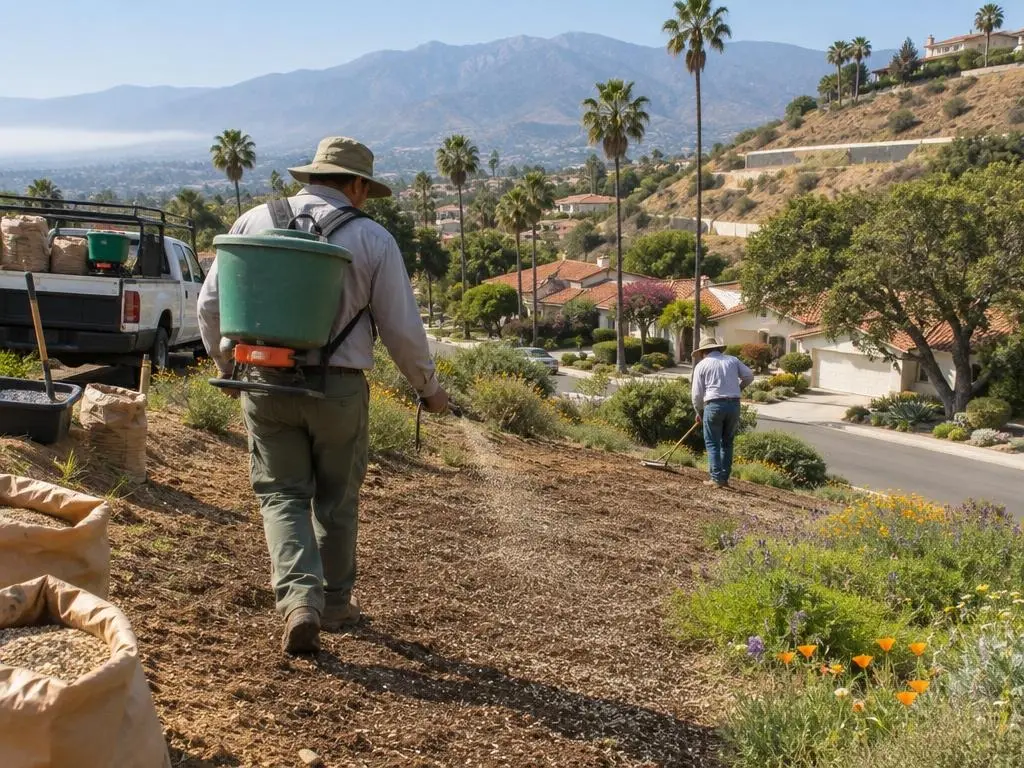
Published Ranges for Larger Areas
| Job | Published range |
|---|---|
| Hydroseeding per acre (LawnStarter, 2026) | $2,136 to $4,897 |
| Hydroseeding per acre (Fixr, 2025) | $2,000 to $4,000 |
| 1 acre (HomeAdvisor, 2026) | $2,600 to $8,700 |
| Park hydroseeding bids, North Little Rock AR (2023) | $2,595 and $3,325 per acre |
| Sprayed wood-fiber mulch (a DOT erosion bid list, 2025) | $98 per 1,000 sq ft |
These are published figures from the named sources, not our prices. Mix, mulch rate, slope, water and number of trips set the cost. Treat these as ballparks. We commit to a number only in the written quote.
How a Commercial Job Runs
1. Plan review
We read the stormwater and erosion control plans and the seed specifications.
2. Walk the site
Areas, slopes, water source, truck access and work-hour limits confirmed.
3. Quote by area and trip
Per-acre or per-square-foot pricing with mobilizations listed.
4. Apply and record
Seed, mulch and tackifier applied at the specified rates, with dates and areas noted for your records.
5. Return as phases close
Follow-up passes for new areas and touch-ups after storms.
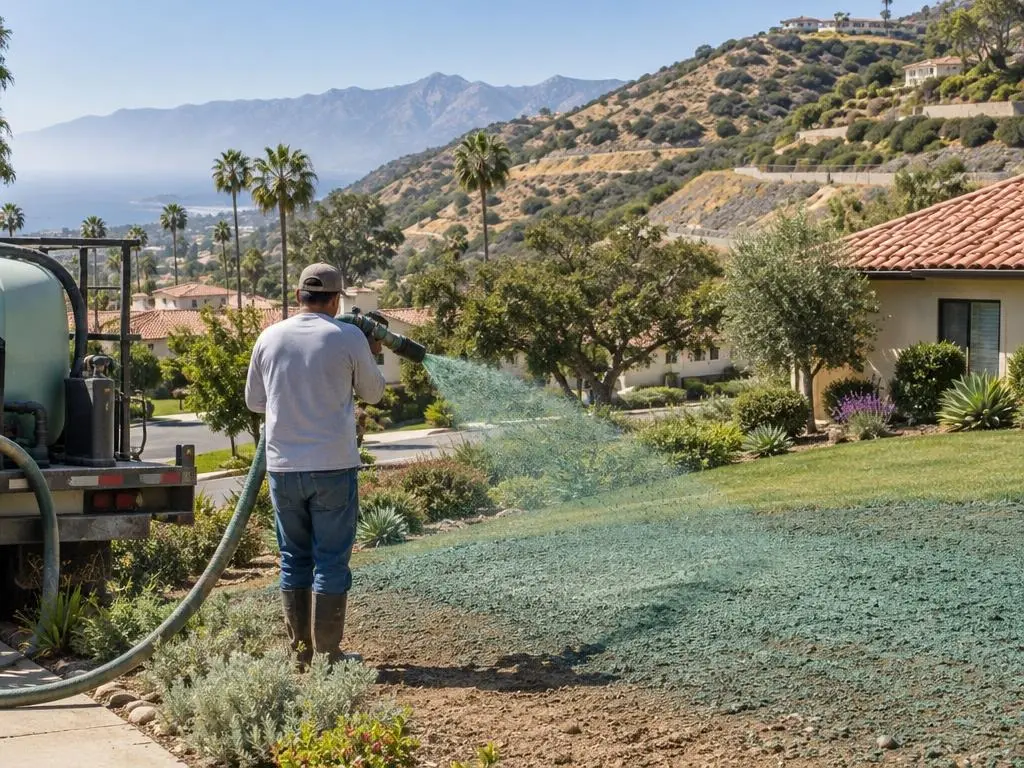
Why Choose Us for Commercial Hydroseeding
We read the plan first
Rates and mixes follow your specifications, not a default tank recipe.
Rainy-season awareness
We help you get ground covered before October 1 when that date matters.
Clear records
You get dates, areas and materials for each application.
One crew for seed and sediment control
Silt fence, inlet protection and seeding can come from the same call.
Commercial Hydroseeding Questions
Do I need a state stormwater permit for my project?
It does if one acre or more of soil gets disturbed, counting the whole development when your parcel is one piece of a bigger project. That threshold brings in California's Construction Stormwater General Permit. Your engineer or stormwater consultant handles the filing; we install the seeding and controls the plan calls for.
Can you meet the seed and mulch specs in our plans?
Yes. Send us the specification sheet and we will quote to the listed seed mix, mulch type and rate. If a product is hard to get, we will propose an equal and get your approval first.
How fast can you cover a site before a storm?
Small and mid-size sites can usually be sprayed in a day once we are scheduled. Before the rainy season, booking early matters, because many sites need cover at the same time.
Do hydroseeding contractors handle irrigation?
We do not install sprinkler systems. We coordinate with your irrigation contractor so seed goes down when water is ready, which the hillside planting rules expect on graded slopes.
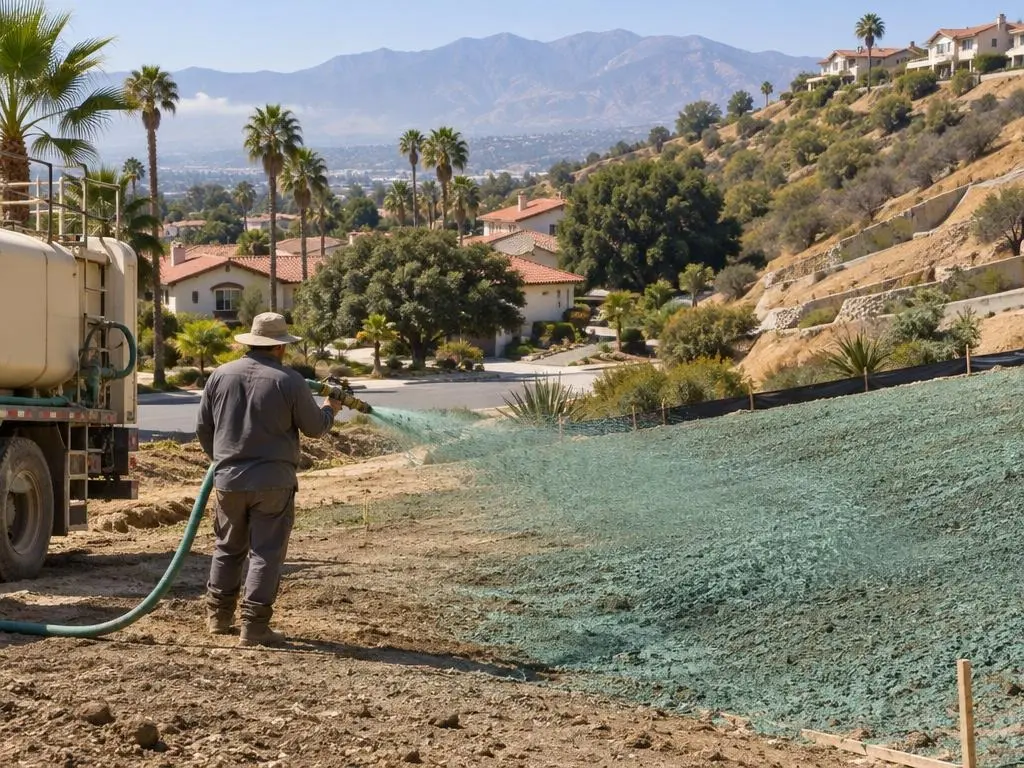
Commercial Hydroseeding Service Areas
- Hydroseeding in Los Angeles, CA
- Hydroseeding in Santa Clarita, CA
- Hydroseeding in Palmdale, CA
- Hydroseeding in Lancaster, CA
- Hydroseeding in Thousand Oaks, CA
- Hydroseeding in Simi Valley, CA
- Hydroseeding in Calabasas, CA
- Hydroseeding in Malibu, CA
- Hydroseeding in Pasadena, CA
- Hydroseeding in Glendale, CA
- Hydroseeding in Burbank, CA
- Hydroseeding in Rancho Palos Verdes, CA
- Hydroseeding in Agoura Hills, CA
- Hydroseeding in Diamond Bar, CA
- Hydroseeding in Glendora, CA
- Hydroseeding in Claremont, CA
- Hydroseeding in La Canada Flintridge, CA
- Hydroseeding in Altadena, CA
- Hydroseeding in Whittier, CA
- Hydroseeding in Moorpark, CA
- Hydroseeding in Chino Hills, CA
- Hydroseeding in Walnut, CA
- Hydroseeding in Sierra Madre, CA
- Hydroseeding in Westlake Village, CA
Get a Commercial Hydroseeding Estimate
Send your plans and we will quote by area and trip.