
Ground prep before seed
Grading, Topsoil & Dirt Work in Los Angeles, CA
Yards shaped to drain, topsoil spread where the native ground is sand or fill, and a seedbed ready to spray.
- No-charge visits to your property, with estimates in writing
- Itemized quotes: prep, seed, mulch and erosion control
- Seed mixes picked for coast, basin, valley or foothill
The Ground Under the Seed
Grading, topsoil and dirt work in Los Angeles are the steps that decide whether new grass or a native seed mix succeeds. Seed sprayed on compacted fill, construction debris or a yard that drains toward the house will struggle no matter how good the mix is. Our crew handles yard grading, fine grading for seed, topsoil delivery and spreading, debris and rock removal, and small drainage corrections. Bigger jobs often need more, so the same grading crew digs and trenches for drain lines that carry water out of the yard the way it should go.
What city ground is made of
The valleys and coastal plain are mostly alluvial fans. The USDA's description of the Tujunga series, established in Los Angeles County, lists textures from coarse sand to loamy fine sand, with high hydraulic conductivity and low runoff. It also notes that in urban areas there is usually a thin layer of human-transported material spread over the surface, with up to 10 percent construction debris allowed in some layers. Anyone who has dug in a tract-home backyard has seen it: a few inches of imported fill, chunks of concrete and stucco, then clean sand. We screen or pull out debris and add topsoil where the root zone needs to hold more water.
Grading for drainage
The basic rule is that ground should fall away from the house. Low spots against a foundation, a patio that tilts the wrong way, or downspouts that dump onto a flat lawn all lead to soggy areas, mosquito-friendly puddles and erosion during winter storms. We regrade to send water toward the street, a drain or a swale, and we can trench and set drain pipe where a surface fix will not work.
When grading needs a permit
Small yard reshaping usually does not. Larger earthwork does, and in hillside areas the rules tighten. Between October 1 and April 15, the city's rainy season, permitted grading over 200 cubic yards cannot start until an erosion control system is approved. The code also bars grading, excavation and hauling of earth between 6 p.m. and 7 a.m. and on Sundays, except in emergencies. If your project crosses into permit territory, we will tell you and work with your engineer or contractor's plans rather than around them.
Topsoil: when it helps and when it does not
On sandy ground, a few inches of blended topsoil or compost mixed into the top layer makes a big difference in how long the root zone stays moist. On heavier clay soils in some hillside and older neighborhoods, the better fix is often loosening and amending what is there rather than adding a new layer on top that can perch water. We look at what you have and explain the choice.
Land grading for larger lots
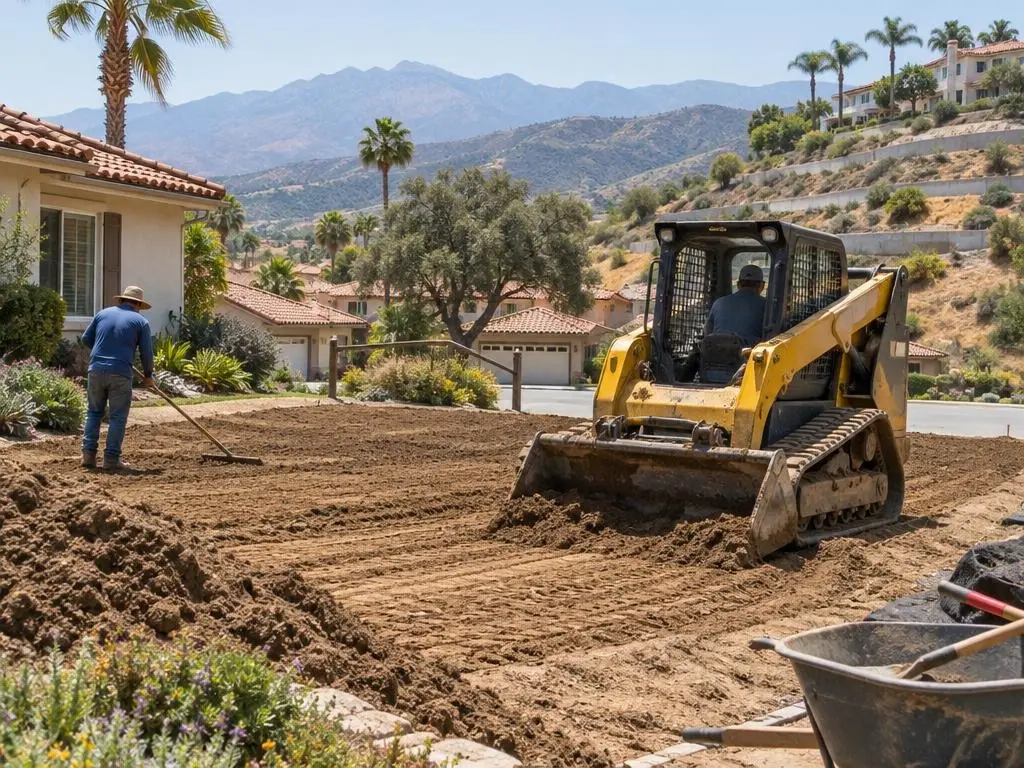
For larger residential parcels, horse properties and small commercial lots, we bring equipment sized to the job and grade to a laser or string line where the plan calls for it. Finished surfaces are left ready for hydroseed, so the same crew can go straight from dirt to seed.
Hillside lots
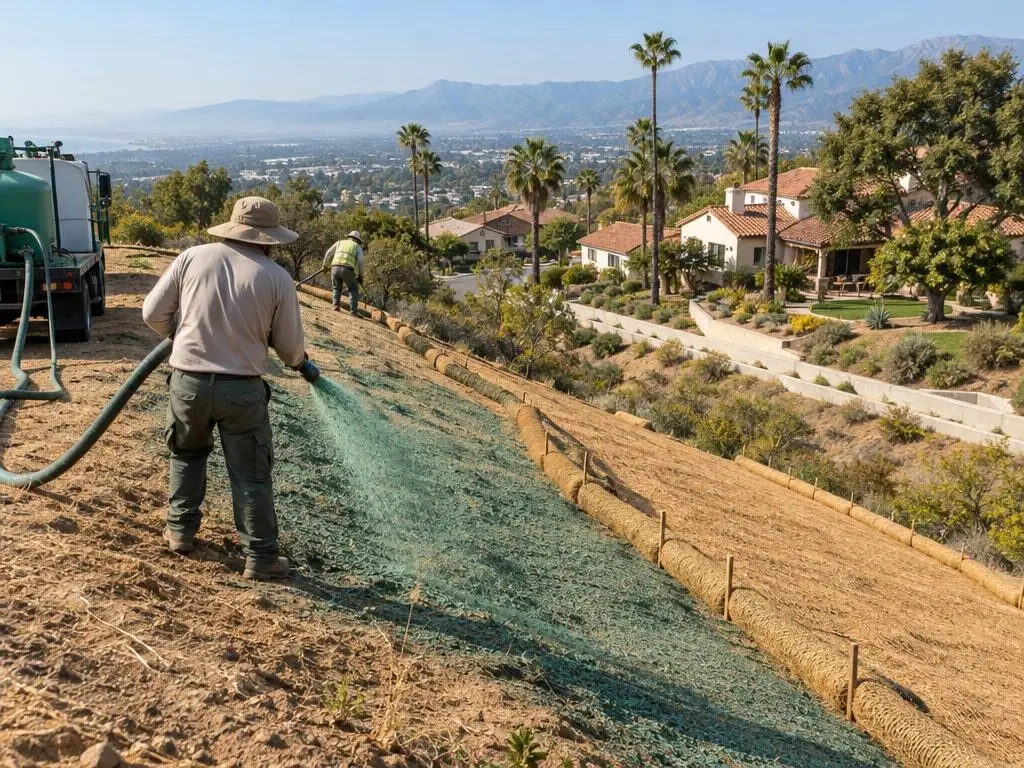
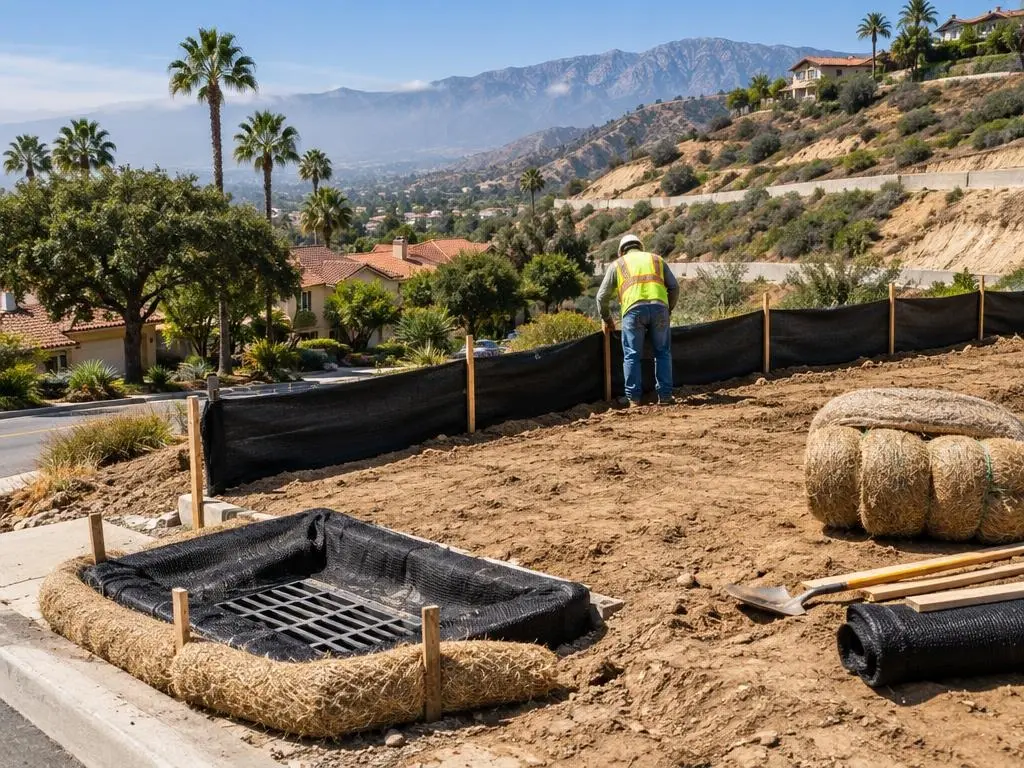
Grading on a hillside lot carries more rules and more risk than flat-ground work. City code requires that excavation or fill never cause soil, rock or debris to fall, roll, slide or flow onto adjoining properties, and graded slopes in hillside areas must be planted and irrigated afterward. On those lots we keep earthwork small and close to plan, set silt fence before we start and seed or cover the disturbed ground as soon as the grade is final. Retaining walls and engineered slopes belong to your engineer and a wall contractor; we handle the soil prep and seeding around them.
Compaction and the seedbed
Heavy equipment, delivery trucks and years of foot traffic pack soil until water runs off instead of soaking in. Compaction is the reason many new lawns stay patchy. Before fine grading we rip or till compacted areas, then firm the surface just enough that your foot sinks about a quarter of an inch. Too fluffy and the ground settles unevenly after the first watering; too hard and roots cannot get down.
Small jobs welcome
Plenty of our dirt work is a single backyard: removing an old lawn, leveling a play area, or fixing one low spot by the patio. We price those as carefully as larger jobs.
Leaving grade ready for the next trade
If a landscaper, a paver installer or an irrigation contractor follows us, we grade to the heights they need and mark finished elevations where hardscape will meet soil. Sprinkler trenches are easiest to dig before the final rake, so we plan the order with you. When we are seeding the job ourselves, we finish the grade the same day we spray, so wind and foot traffic do not undo the work.
Dirt Work We Handle
From a single backyard regrade to prep for an acre of seed.
Yard grading
Reshaping lawns and beds so water moves away from the house.
Fine grading for seed
A smooth, firm seedbed raked to final grade before hydroseeding.
Topsoil and compost
Delivered, spread and blended into sandy or poor ground.
Debris and rock removal
Concrete, stucco, rock and old fill cleared from the root zone.
Drainage trenching
Excavation and trenching for drain lines and downspout runs.
Land grading
Larger lots shaped to plan for building pads, arenas or pasture.
Published Grading and Topsoil Ranges
| Job | Published range |
|---|---|
| Lawn leveling (HomeAdvisor, 2026) | $1 to $2 per sq ft |
| Fine grading (Lawn Love, 2026) | From $0.08 up to $1.00 per square foot |
| Residential resloping (Lawn Love, 2026) | $770 to $3,000 |
| Grading labor (Lawn Love, 2026) | $40 to $180 per hour |
| Topsoil material (Angi, 2026) | $10 to $55 per cubic yard |
| Topsoil delivery (Angi, 2026) | $50 to $150 a load (15 cubic yards or less) |
| Deliver and spread labor (Angi, 2026) | $60 to $125 per hour |
These are national ranges from the named guides, not our prices. Access, debris, haul-off and permits change the cost. Treat these as ballparks. We commit to a number only in the written quote.
Grading Job Steps
1. Look and measure
We check slope, drainage, soil and how equipment gets in.
2. Written scope
Grading, topsoil, haul-off and trenching priced line by line.
3. Rough grade
Soil cut and filled to send water where it should go.
4. Amend and fine grade
Topsoil or compost blended in and the surface finished for seed.
5. Seed or hand off
We hydroseed right away or leave a clean grade for your landscaper.
Why Choose Us for Grading, Topsoil & Dirt Work
Prep built for seeding
We grade knowing what the seed needs, because we spray it too.
Honest about permits
We tell you when a job crosses into permitted grading.
Debris dealt with
Concrete and old fill come out instead of getting buried under topsoil.
Grading, Topsoil & Dirt Work Questions
How much topsoil do I need before hydroseeding?
On sandy or debris-filled ground, a few inches blended into the top layer is common. On decent soil, loosening and a light amendment may be enough. We decide after looking at a test dig.
Can you fix water pooling against my house?
Usually, yes. We reshape the grade so the soil slopes down and away from the foundation, and where needed we trench in a drain line to carry water to the street or a drain.
Do I need a permit to regrade my yard?
Small reshaping usually does not. Larger earthwork, especially on hillside lots, often does. We will tell you if your job looks like it needs one and work from approved plans.
Do you haul away old dirt and debris?
Yes. Haul-off is listed separately on the estimate so you can see what it adds.
Grading, Topsoil & Dirt Work Service Areas
- Hydroseeding in Los Angeles, CA
- Hydroseeding in Santa Clarita, CA
- Hydroseeding in Palmdale, CA
- Hydroseeding in Lancaster, CA
- Hydroseeding in Thousand Oaks, CA
- Hydroseeding in Simi Valley, CA
- Hydroseeding in Calabasas, CA
- Hydroseeding in Malibu, CA
- Hydroseeding in Pasadena, CA
- Hydroseeding in Glendale, CA
- Hydroseeding in Burbank, CA
- Hydroseeding in Rancho Palos Verdes, CA
- Hydroseeding in Agoura Hills, CA
- Hydroseeding in Diamond Bar, CA
- Hydroseeding in Glendora, CA
- Hydroseeding in Claremont, CA
- Hydroseeding in La Canada Flintridge, CA
- Hydroseeding in Altadena, CA
- Hydroseeding in Whittier, CA
- Hydroseeding in Moorpark, CA
- Hydroseeding in Chino Hills, CA
- Hydroseeding in Walnut, CA
- Hydroseeding in Sierra Madre, CA
- Hydroseeding in Westlake Village, CA
Get a Grading, Topsoil & Dirt Work Estimate
Get the ground right before the seed goes down.